The agent draws the line. You still have to see the face.
Building an app with AI is easier than ever, but turning something that works into something people actually value still takes human judgement, taste and curiosity.
The agent draws the line. You still have to see the face.
A few lessons from a tiny app that apply well beyond scribbles.
What this is about
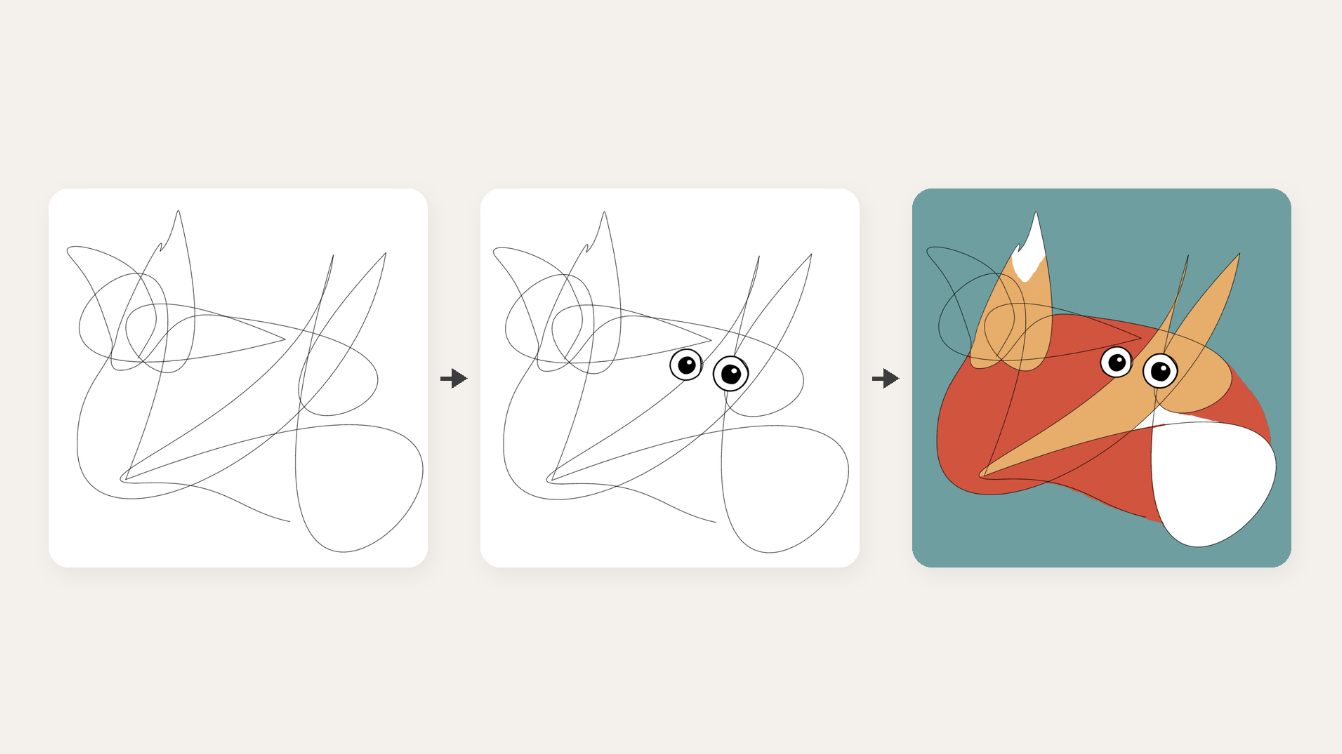
We find faces everywhere: in clouds, plug sockets, coffee stains. It's called pareidolia. As a child, I turned it into a game. Draw a random scribble, then hunt for the face hiding inside it. I was always afraid of the blank page, and the scribble fixed that. One line was enough to set my imagination looking for the next one.
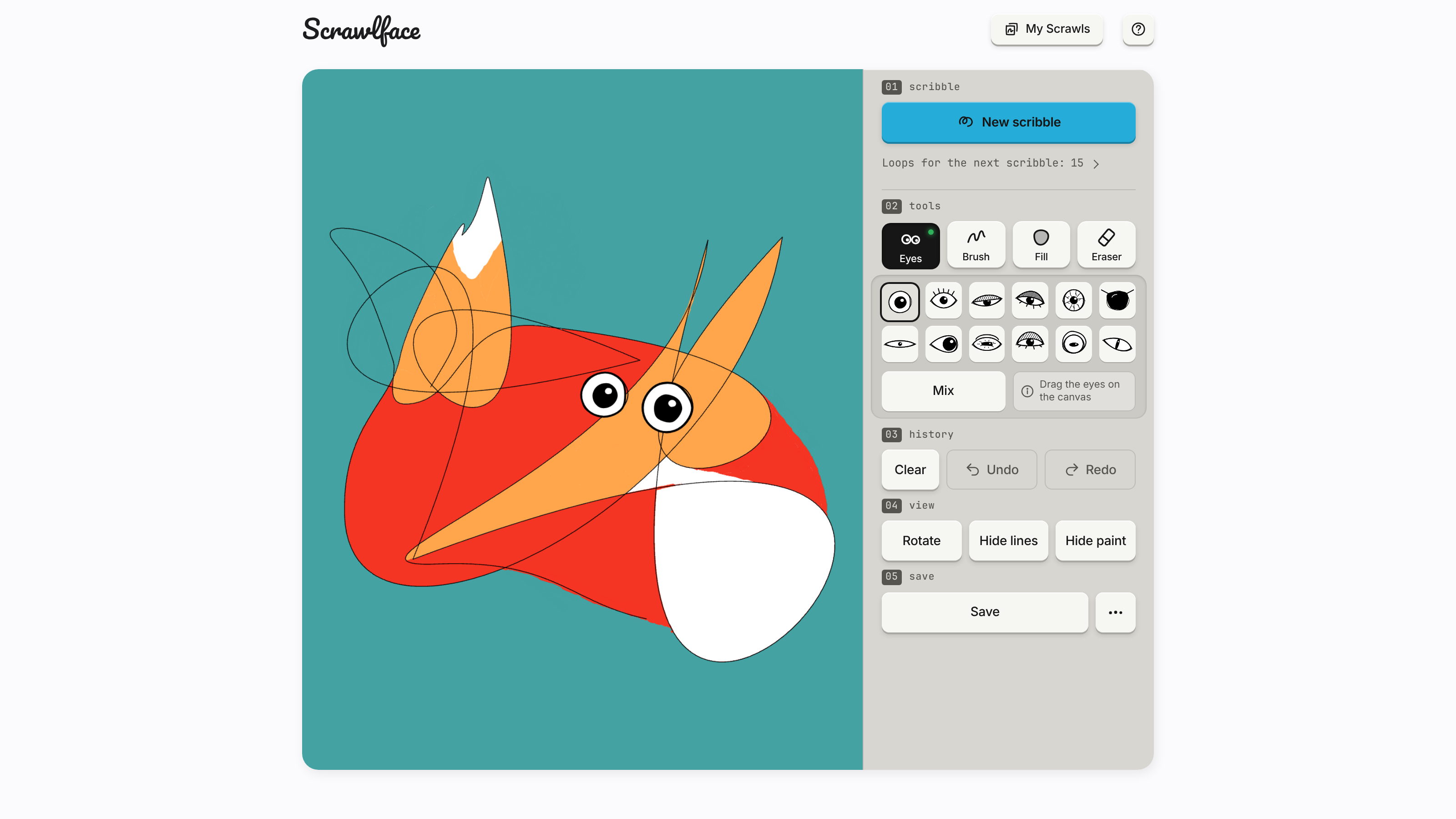
So I spent a token or two too many building Scrawlface with Claude Code. It draws a random scribble, you drag a pair of eyes onto it, turn it until something looks back at you, and paint it.
Building got cheap. Judgement didn't.
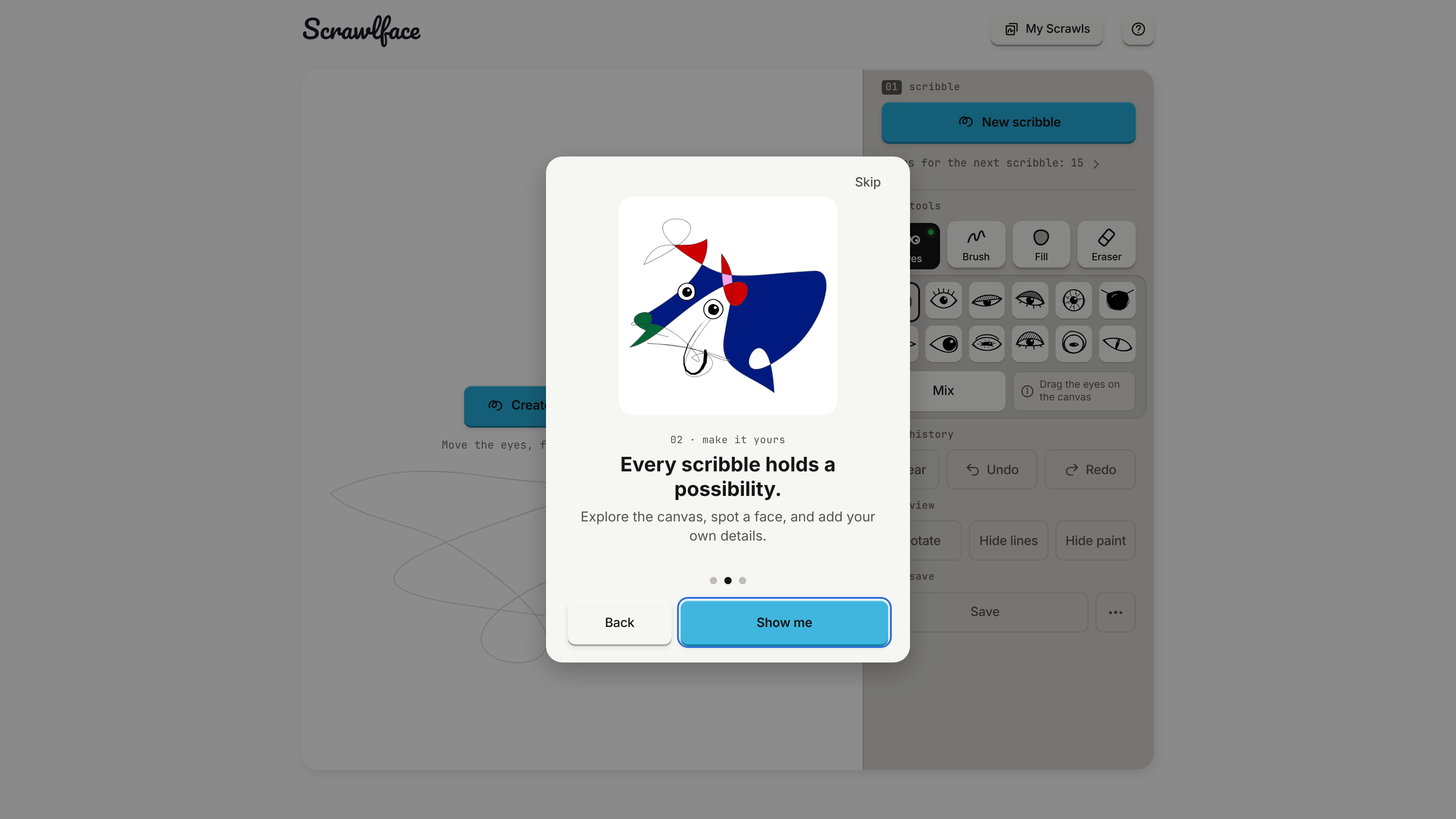
My first onboarding hid the eyes and walked you through three tooltips so you'd discover the face yourself. It took one conversation to build, and the tests passed. Playing it felt like homework.
Nobody had asked whether three tooltips were worth it. In a team, an engineer would have. With an agent, every idea arrives already built, and the only thing between you and a worse product is your willingness to delete it.
The decisions that mattered were small. The app asked "Save or discard?" the moment you moved an eye. That was technically correct, since the picture had changed. In practice, it was annoying. Moving eyes is looking. Painting is making. So now only paint counts.
An agent is the perfect cure for the blank page. It will draw you the first line every time. Seeing the face in it is still your job.
Clicks are cheap. Finishing isn't.
People press a random generator a lot, and that tells me very little. So before building a tracking dashboard, I asked one question: is this a practice people return to, or something they poke once?
I defined activation as finishing a scrawlface: saving or sharing it, or moving on after three strokes of paint. The other signal is coming back without a notification to prompt it.
It's live at scrawlface.app. The numbers are too small to mean anything yet, and the most engaged user so far is me, so before learning anything about anyone else, I had to work out how to stop counting myself.
What I'd do differently
I'd write the metrics on day one, instead of redesigning the onboarding by feel and never knowing which version worked. And I'd show it to five strangers much sooner.
An agent can build anything I describe. It can't tell me whether someone else sees the face.
That part, I suspect, will stay human for a while. Which was the point of the app all along.